Showing posts with label Travelling. Show all posts

Wednesday, February 26, 2014

Libya Part 3: Ghadamis

After two long days on the road, we finally reached Ghadames.  The most notable thing about the non Unesco part of the city is that there are so many new buildings here.  We were told by our guide that in an effort to protect Ghadames, the government moved all of the locals into new housing in the 70s. To the government's dismay, the new apartment style housing did not protect from the heat the way that Old Ghadames city does and the locals usually move back into their old houses in Ancient Ghadames city during the summer months.  And this is why this city is so cool.  Even with modern day technology and architecture, it does not stand up to the ancient buildings where the berber people had already discovered the best way to cope with the hot desert weather. 

A typical corridor- palm tree trunks, thick mud walls and lots of shade
It's easy to understand why Ghadames is on the UNESCO world heritage list. The architecture, shape and art work of this place is really one of a kind.  When entering Ghadames, there are a few characteristics that become obvious. The first is how the temperature immediately drops the moment you walk into the gates of the city.  The second is the white lime washed walls. The third is that every wall is connected.  In essence, this city is one gigantic organism.  With the exception of the hotel where Sophia Loren stayed in while filming The Road to Timbuktu,  you can literally walk the entire city from the roof tops. 
 It is said that the reason for this is because the roof tops was reserved for woman and children as they were not normally allowed in the lower corridors of the city. The last characteristic is the triangular and step like roof top forms that hug every corner/ edge of the city.  this triangular form is the same form found on the painted walls of the houses that hug the window sills.  It is said that this triangular form is typical of their berber designs. While in Ghadames, we visited numerous traditional houses, took a tour on the roof tops and had a camel stew lunch in one of the traditional homes.
Just outside of the city walls, you will find a small tourist center where one can find traditional berber arts.  Here a father son team work on leather making traditional leather moccasins.  Brightly decorated and again with the triangular forms, they resonate the traditional berber art forms that were repeated in the homes inside Ghadames. 

I'm not sure what the state of Ghadames is today- it's said that there was concern over the upkeep of the ancient city during the revolution.  I hope that it is still being maintained and restored as it is truly the "pearl" of the desert- an oasis with a beautiful organic past. 

Sunday, February 23, 2014

Libya Part 2: Berber granaries, rusty doors and desert views

Main central countyard of Nalut
After our visit to Leptis Magna, the next day we set out to the South West of Tripoli in search of Ghadames.  What you should understand about Libya is that like any other developing country, the roads outside of the major cities are sparse and often not paved.  It looked like they were doing some major infrastructure work to build some two lane asphalt roads on top.  The journey is only 600km but would take us two days to make the journey. 
Granary of Nalut
 Along the way, we stopped to visit the granaries of Qasr Al Haj and Nalut.  Qasr Al Hag is a fortified granary built in a circular form with a large center courtyard.  As in any granary, there are remnants of the grinding tools and olive oil storage vases. Made from bricks, gypsum, and palm tree trunks, these monuments have stood for over 800 years.
Granary of Nalut
While Qasr Al Haj is interesting, it is the twisting narrow corridors that give the granaries of Nalut character over Qasr Al Haj.  It feel like the granary organically grew over time- with new granaries being added on creating a maze of stacked granaries.  It is amazing to still see the palm tree doors and ledges sticking out from these mud structures.  Part of it reminded me a bit of Santorini and the way that the buildings hug the mountain wall.

One thing that I always enjoy taking pictures of are doors. What was really cool about all these old berber villages that we stopped at were the rusty metal doors that gave a bit of life to these mud, rock, brick structures.  It almost seemed odd that these old dilapidated buildings would have such solid doors to protect them.  I also loved the textures of the rust, and different layers of paint on the doors that really gave a feeling that these doors have endured a lot in their time and have a story to tell.


On the way back from Ghadamis, we stopped at a random Berber village on the Western Mountains just outside of Tripoli.  Most of the Berber houses are abandoned but I wasn't surprised to see that many of them were still in use.  These structures which were dark and a bit damp helped to keep the villagers cool against the harsh hot weather. 
The Berber villages and Granaries are an integral part to Libyan culture.  They tell a story about how the people survived over time, how they had to work together and still do to this day to live.

View towards Tripoli from the western mountains

Saturday, February 8, 2014

Libya Part I : Leptis Magna

Ok. So I never actually thought I would ever go to Libya but when my mom asked me I thought to myself why not? It just sounded like one of those really off the beaten road type of places that most people would never go to.  My first question was "what are we gonna see there?" My second was "are we allowed to get in the country?".

To answer my first question- to the rest of the world that wasn't banned from entering the country, the Libyan coastline is dotted with rich history- from the Berber people to the Phoenicians, the Carthaginians, Alexander the Great, the Roman Empire and the Byzantine Empire, they have all ruled Libya at one point in history or another.  In the early 1900s (prior to the former Gadaffi regime), Libya was part of Italy until about 1930.  It was of course a surprise that our driver spoke fluent Italian, remnants of the connections of the European nation not far across the Mediterranean.

One of the first places we visited in Libya is the UNESCO World Heritage Site of Leptis Magna (now known as Sabratha), the birthplace of the Roman Emperor Septimius Serevus who ruled from 193-211. Much of the work done in Leptis Magna was carried out during the Italian occupation but there is still so much to uncover at Leptis Magna.  One of the nicest things about Leptis Magna versus more popular ruins like Ancient Ephesus in Turkey is that the tourist industry isn't as developed and thus you virtually have the place to yourself. Okok! enough history, onto the pictures already!

The most notable things to see at Leptis Magna is the Septus Severin arch. The thing is massive!

the Ampitheater
 In 2005, a group of Archeologists from Hamburg discovered a series of mosaics, kept intact and protected by mother nature as depicted below:
Uncovered mosaics overlooking the Mediterranean Sea
The Mosaic work from Leptis Magna is considered some of the best in the world
The Venus Forum
One of the most magnificent things on site is the Theater.  The degree to which this theater has been reconstructed is truly magnificent.  The fact that the theater overlooks the blue/green of the sea in the background adds a touch of je ne sais pas quoi that I have not experienced at any other ancient ruin.


Other things to see at Leptis Magna include the Septimius Serevus forum with its medusa like heads and the Roman Basilica with its intricate stone work around the doors. The immense size of the Roman Basilica is also something to marvel.  We spent a good four hours walking around but could have easily spent the whole day there.  

Leptis Magna is an incredible site to visit.  In addition to the site, the fact that it sits on the sea really sets it apart from other sites.  This is one of those must see sights as it is truly unparalleled and a hidden gem

Saturday, January 25, 2014

Hiking in the Swiss Alps- from Mt. Moleson to Les Mosses

I have to admit that Switzerland has some of the most incredible scenery in the world.  The backdrop always seems surreal.  Although considered a "little" mountain, Mt. Moleson in Gruyere is one of those "best kept secrets" (ok that's totally my own opinion) of Switzerland.  I had previously blogged about going up to Mt. Moleson for the Lever Du Soleil in early fall.  That time it had been raining for days so the nice fluffy cumulous clouds really helped to give some depth to the rising sun but also blocked the "real" view.  I had some friends visiting from out of town in the summer time and we decided to head up Mt. Moleson to see what we could get on a crystal clear day.  I think the picture below says it all. 
My friend taking in the fresh air (finally! doesn't smell like cow poo)
We saw that some people were actually hiking all the way back down, not using the funicular and thought they were crazy.  As we were not that courageous (or crazy) we instead took a leisurely drive through the Alpes to Les Mosses in Ozzelfart (that's a mix of opel and ausfart, exit in German). Les Mosses is a tiny mountain village just up the hill from Chateau D'Oex (famous for their hot air balloon festival). Les Mosses is very rustic in comparison to the overwhelming bling bling culture of Gstaad (and home to Johnny Halladay who is from what I understand a big deal around these parts).  For those of you who can't afford a private guide to take you up to the slopes and prefer a bit of rustic-ness, Les Mosses is the place to go. 

Behind the camping centre of Les Mosses, a small road leads you about .25 of the way up a hill. There you will find a dairy farmer and his really cute cows.  As you keep on climbing up (and warning it really is quite steep), at the very end of the 30 minute hike, is a great little surprise.  A small restaurant nestled around a lake awaits hikers needing a break (like us). The lake is a good little stroll around as well with small trails breaking off of it.  I have gone back here a few times and meandered off to find Lamas?? during the spring time.  
Les Mosses is a great weekend getaway and a great chance to really discover the Swiss countryside. 


If you are looking for what the locals do versus what the glitzy tourists do, these are two places you definitely need to hit up!


Thursday, January 16, 2014

Grignan, Drome Provencal- a heavenly slice of Provence

Last spring, we had the chance to take some time off with some friends to visit the French department of Drome.  Drome is just south of Isere and just north of Provence.   The original idea was to stay as close as possible to Valence and visit the Valhrona chocolate factory (again).

 I did some research on some "Chambres D'hôtes" (that's french for B&B) and "Gites" and since we were a large group of 10 (silly me, I made the reservation for 8, thank god the Gite still had space), there were only a few Gites that could accomodate all of us.


Yeah that's our laundry
A Gite is basically a series of Chambres D'hotes put together.  A Gite can be a stand alone house, or a connected house with our without a kitchen. The one that I settled on was La Croix du Gres- the location was a bit far but the website and photographs convinced me that it was the way to go (*ahem importance of having a good website). The complex is run by Noelle and her partner Sid with the help of Noelle's children and really super friendly son.  The complex is completely interconnected and consists of 2 houses and a series of Apartments with kitchens and rooms without kitchens.  Noelle, her family, the dogs, cats and horses also offer home cooked meals, horse rides, an outdoor pool, lots of lavender, rosemary and thyme and super knowledge of the area and a whole lotta hospitality.
Nothing beats a sunset dinner overlooking the French countryside
The Gites were extremely charming and impeccably decorated.  Most of the wall art was created by Noelle's grandfather who also built the Gite(s) himself. The Gite also features an enormous Salon or living room that houses a huge fireplace and more amazing art.  Noelle and her family offer dinners in the living room where guests help to prepare the food that is cooked in this gigantic fireplace.  It's amazing to think that her grandfather put everyone of these gigantic stones into place.

We were lucky enough to make it to the local farmer's market in Grignan.  It has been a long time since I've gone to such a comprehensive market.  The produce was fresh, in abundance and just gorgeous!
Just a little peak at the amazing variety of food: naturally flavored wild honey, lavender, amazingly tasty saucissons, world famous Montmelier nougat, confit garlic (my husband tried a piece and didn't have stinky breath afterwards. he said it was mild and very tasty), asparagus and onions, olive tapenade 
...And of course cheese there was wonderful gorgeous cheese. 

 Tomme de Montagne is just a generic cheese produced in the French Alps.  The taste is generally mild and fat content is usually low as the rich creamy part of the milk is used elsewhere.


Cantal is from the Auvergne region of France.  The unpasteurized cheese tends to have a tangy butter taste.  I have been told before that cheese such as this one that uses the "winter milk" meaning milk that is produced during the wintertime when the cows are kept in the stables and fed hay, the milk tends to hold less floral/ herbal/ grassy flavors.  Also, the winter milk tends to have a higher fat content, and thus (as depicted from the photograph) the winter cheese does not become as hard as summer cheese. 
 Our favorite cheese, this unpasteurized cheese is usually quite hard (still bendable).  Made in the French Comte region of Alsace, many consider Comte the French version of Gruyere.  just like Gruyere, the flavor of the cheese is strong but not harsh with a slightly sweet tinge to it. The Comte we usually find at the grocery store is aged 12- 18 months.  this fine specimen of 24 months had a stronger flavor and the delicious Comte cheese crystals that are so coveted.  I had the pleasure of dining at Arpege in Paris and man, do I wish I could get my hands on some more of their 48-60 month old Comte.

Oh, did I mention that Grignan also happens to be voted one of France's most beautiful cities?


The Tuesday market is a MUST do so if you plan on heading down to Drome, plan to be there on a Tuesday morning.  We also highly recommend staying at La Croix du Gres.

Our visit to Drome was one of the best vacations I've had in a long time. The locals in Drome are incredibly helpful and nice and the food, mind blowing.

Addresses:
La Croix du Gres
26230 Valaurie, France
+33 7 87 02 80 36
Lacroixdugres.com

Marche de Grignan
Every Tuesday 8am- 1pm


Thursday, April 22, 2010

The Nestle Outlet Factory..

*Warning* I am not responsible for any weight that you may gain after reading this posting. thank you.


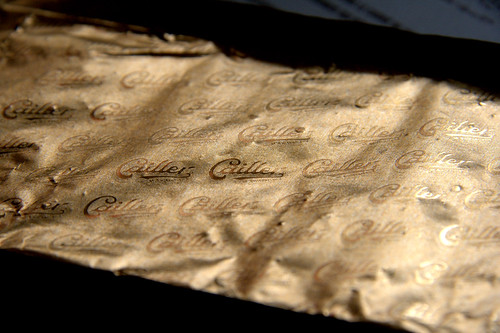
At the beginning of the school year, I did the Cailler- Nestle chocolate factory walk. A mere 3 miles from my dorm-- it was a gorgeous jaunt through the forest and into the little town of Broc. I learned my lesson the hard way-- consuming so much chocolate that my stomach.. very angry at me and my head very dizzy from the sugar high taught me to restrain myself the next couple of times that I went.

I also heard a rumor of a "Nestle Factory Store". I researched and researched-- with no address, just a short 4 year old posting on trip advisor about this so called factory store. My friend and I drove aimlessly around Broc trying to find this "unsigned, nondescript white building next to the train station" with no luck.

Then the other day, it dawned on me (I think I was in the shower where my MOST productive thinking comes about). Nestle-- has websites-- Nestle has lots and lots of websites and a million products that I wanted to make a point that Nestle and Kraft are taking over the food world using the same branding techniques and growth strategies).
So, are you ready? I found the Nestle outlet store.. In fact, in Switzerland, there are 15 of them. The one in Broc is-- not next to the regular Broc Station-- it is next to the Broc- Nestle station. As you drive towards the Cailler factory, if you just pass the factory-- the next building after on the left hand side is.. THE OUTLET STORE!

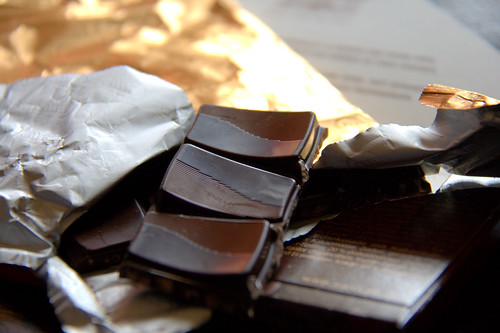
Most everything is cheaper, but not everything. They have certain items that go on sale.. much like my new favorite chocolate bar: Dark Chocolate with Coco Nibs (mmmm)


The best time to go is after a holiday.. when all the holiday chocolates go on sale- if you are just looking for chocolate and do not care if they come in funny shapes of past holidays...

alright. I will be nice... here is the address and website link to other nestle outlet stores. Again I am not responsible for any weight that you may gain from this posting...

NESTLE SUISSE S.A.
Fabrique de Broc / Nestlé Shop
derrière la gare fabrique
1636 Broc

Hours:
Mon-Thursday 10.00 - 17.30
Friday 10.00 - 17.00

Saturday, October 10, 2009

Brazilian Donut: Sonhos or Bolas de Berlim


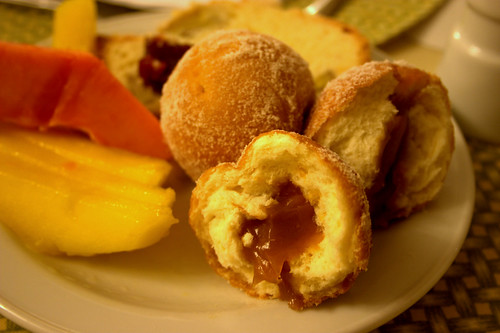
So these aren't from any special famous place. In fact- I had the hardest time finding these suckers. Evidently, even though they are the Brasilian version of a Donut... people don't eat them very often. I asked about 5 people where to find Sonhos or Bolas de Berlim and the response was " I don't know".

We happened to have them for breakfast at our hotel in Iguazu Falls.
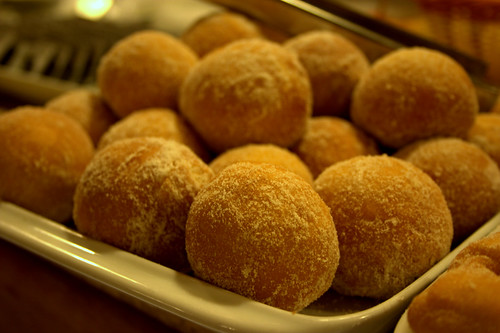
Sonhos are " Little dreams" that are actually Portuguese in origin (yes yes, I will be looking for them when I go to Portugal). They are usually filled with goiabada or guava jelly.. these guys were alright.. a little too doughy and dense.. but still the Brasilian donut experience!

Picarones- Peruvian Donuts


On my ever quest to try every donut in every country, the peruvian version is the Picarones. Marita took me to Panchita (world reknown Peruvian chef Gaston Acurio's Steakhouse) in her home town of Mira Flores, Lima, Peru to get one of these tasty fried pumpkin dough morsels.

Picarones are made from a yeast sweet potato dough flavored with cinnamon and anise, allowed to rise much like the traditional american donut. It is fried and served with a syrup made from chancaca.

We caught the restaurant in between service and were taken to the back kitchen where they demonstrated not only how the dough was made but fried off the crispy on the outside, moist on the inside flavorful rings of dough that I would consume a few minutes later.

Picarones

The flavor in the dough make the Picarones more interesting than the american donut. The only problem is that it doesn't get the same yeasty, fluffy consistency that - ok well no one but Stan's can achieve that but you get my picture.

Still very worth it and a two thumbs up to Picarones from Panchita.

Panchita
Avenue Dos de Mayo 298
Miraflores 242-5957, Lima , Peru
Tel: 40 40 41 37

Wednesday, October 7, 2009

Pisco Sour

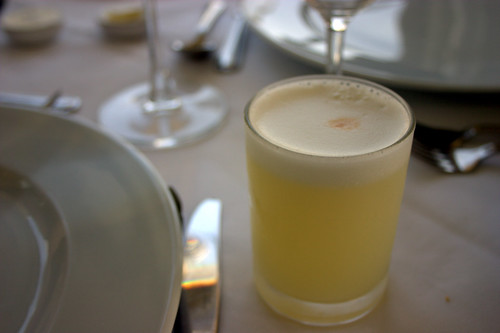
I quickly learned that the national drink of Peru is the Pisco sour. Quite frankly, I think that this should be more then a national drink- it should be one of their national dishes.
Using egg whites to create frothiness(how did american mixologists only discover this in the last 5 years?), Pisco sours are a great aperitif.. or after aperitif, or through the meal, or after the meal or just about any time of the day drink. The gorgeous concoction in this photo was at La Rosa Nautica. Since people on my dad's tours don't really drink.. I had.. one, two, three, four.. oh wait.. FIVE of these puppies during lunch. Each one, equally as delicious as the one before.
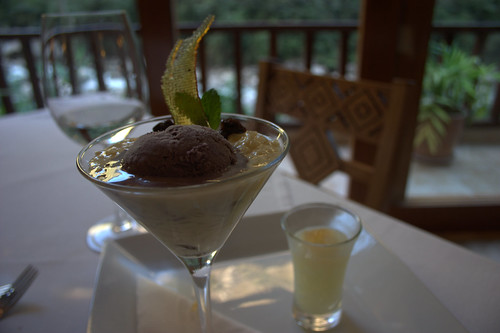
Frozen Pisco sour with Pisco soaked raisins and a shot of frozen Pisco sour at the gorgeous, green, ultra luxury Sumaq Machu Picchu hotel in Machu Picchu- with menu design by world renown Peruvian Chef Rafael Piqueras.


Pisco is an a liquor distilled from grapes and is the national bitter or liquor of Peru. It is said to have originated from the region of Pisqu back in Inca times with the word having Quechuan roots. It is said that Pisco gained popularity when imports of alcohol were banned in Peru and Chile to eliminate competition for locally grown liquors. Pisco, the harder liquor in comparison to wine became the liquor of choice.

There are a few levels of Pisco that should be noted:
Pure: made from one variety of grape.. no blending allowed! usually used are Quebranta Mollar or Common Black varietals.
Aromatic : Muscat or Muscat varietal grapes. Only one varietal again.
Mosto Verde : Made from partially fermented must (the leftover skin bits from the first pressing of wine). Must be distilled before fermentation process turns everything into sugar.
Alcholado : blended grapes
All pisco is to be aged three months. There are differences between Chilean and Peruvian Pisco. Seeing that I've never had Chilean Pisco, Peruvian tastes like heaven to me!

Tuesday, October 6, 2009

Real Maize and Cebiche


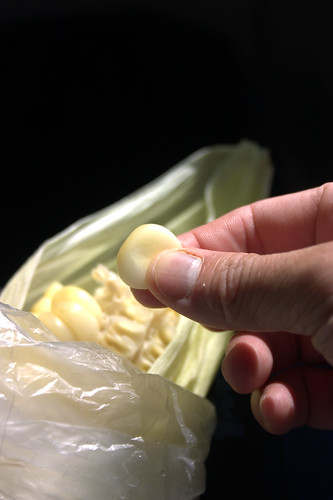
Corn nowadays has been so genetically altered, it looks nothing like the thumb size, triangular Zea Mays that originated out of South America. Nowadays we are use to seeing perfectly neat pinky size rows of corn. The truth is, Zea Mays was not in perfect rows. In fact, original Zea Mays only had maybe 10 kernels on each stalk. One of the few places to still find beautiful un-adultered Zea Mays is in the Sacred Valley of Peru. A typical train snack, boiled Zea Mays, the size of your thumb can be bought for roughly 30 cents.

The starchy, meaty kernels, plucked off one by one, sweet & delicious make an incredible snack. The kernels, succulent and meaty- yes actually meaty in texture.. incredible!
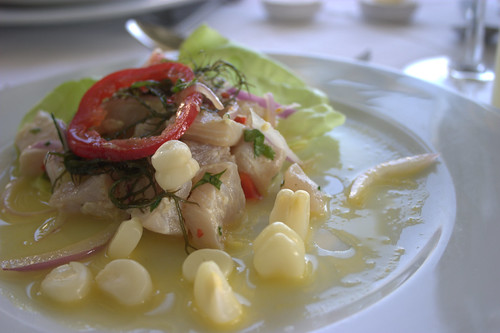
The national dish of Peru is Cebiche. Cebiche is using the acid from limes to cause a chemical reaction "cooking" the protein. Cebiche can be made with all types of seafood and even some meat proteins. One of the most famous places to eat Cebiche is La Rosa Nautica. An instituion in Lima, La Rosa Nautica has been around since 1983, located on the amazing coastline of Mira Flores, Lima, built on the old pier 4- La Rosa Nautica is the place to be seen - and to watch surfers and enjoy a precisely, peruvian meal made from only the freshest and most local ( in fact La Rosa Nautica has their own farm!) produce coming only from Peru.
I was lucky enough to meet Chef De Cuisine Enrique Blondet who also gave me a kitchen tour- although churning out amazing amounts of covers, by utilizing only the freshest ingredients, produces a meal combined with the setting that anyone visiting Lima for the first time will enjoy. I had two plates of his Cebiche ( I was allergic to the Paella.. sooo Cebiche was my only option) in which he used local Zea Mays to add a different dimension of texture to the spicy, tangy Cebiche.


Espigon 4 Circuito De Playas
Lima 18, Peru
Tel: 511-445-0149

Wednesday, September 30, 2009

Feijoada


I know this post is really late but.. I promised to get around to my South American adventure sooner or later right?
When in Brasil, one of the MUST dishes to eat (other then the masses of Brazilian BBQ that you will eat until you vomit and sweat meat..) is Feijoada.
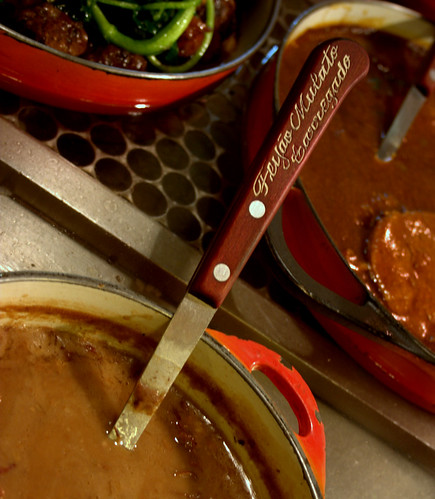
Feijoada is a stew of beans, pork fat and whatever else you wanna chuck in there- brought to Brazil by the Portuguese. Ironically, Feijao means.. well beans.
It's rumored that the Africans brought Feijoada with them after the Portuguese gave them the cheapest remnants of food they could find- beans and pork fat. Being as resourceful as they could, the only thing that could be done with the beans was to soak them for extended periods of time to soften them and get the toxins out, and then proceed to slowly simmer them with some tasty pork fat and whatever else they could get their hands on. The dish turned out to be delicious and now is considered to be a national dish. It's a MUST try dish when visiting Rio De Janeiro!

Monday, August 24, 2009

The Spot

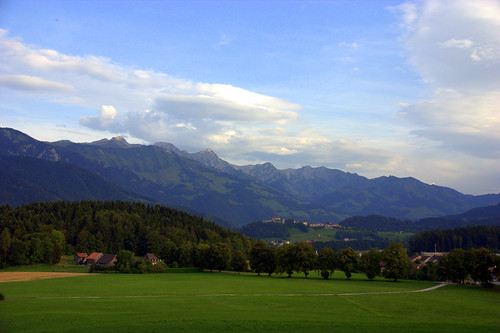
One of my favorite things to do is run in the forest next to our village. Near the end of my run, there is my hideout spot where I can sit for hours at the incredible view that is Gruyere Castle and the Swiss Alps. Hope you enjoy it as much as I do.

Sunday, August 23, 2009

Pear Shaped

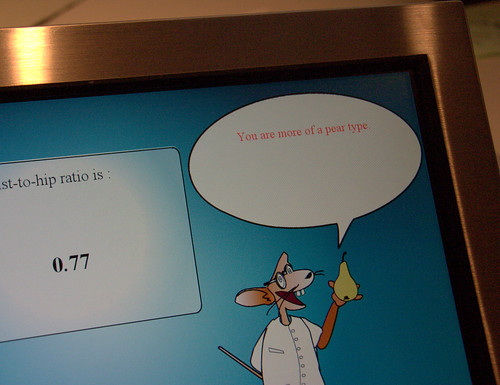
At the Alimentarium in Vevey ( the Nestle museum), they have a section on your "digestion" or what is "healthy eating". I was diagnosed as " pear type". At least its a lot more polite then the time the life guard at the Atlantis Hotel and Casino said " Damn girl, you LOOK like a pear"...

Tuesday, June 30, 2009

The Argentinian Donut

So,with all the traveling that I've been fortunate enough to do recently, I have to take a little detour from Taiwan. Not to worry, there is plenty more of Taiwan that I will be sharing with y'all.. but first.. tid bits from South America.
While in Beunos Aires, I didn't get the chance to find some facturas but.. I got close enough to the Argentinian version of a donut- the churro. Ok ok, so churros are actually from Spain, but I did the best I could with the time allotted ok (I didn't even get to eat my Gelato!!!)?
The original Churro was said to have been invented in the region of Castile (very grassy cow grazing land) with the churros curling to look like the horns of cows. For those of you who have tried to make churros at home, you will know that the long piece of dough instincively wants to curl resembling the horns of bulls. Typically a breakfast item, churros are sprinkled with sugar and dipped into a warm rich cup of hot chocolate.
So where does one go and get Chocolate con churro's? The most famous place to go is Cafe Tortoni, with over 150 years history in Beunos Aires- they are THE cafe of Beunos Aires and of most of South America for that matter .I have to admit- Cafe Tortoni's churro's are OK at best. Kinda hard, not fluffy and just a little eh. The hot chocolate on the other hand was delicious.
The hot chocolate.. oh the hot chocolate! in Argentina, they drink real Leche. None of this non fat, 2% skim, watery, tasteless, hormone pumped milk that we get in the US. You don't have a choice in your leche in Argentina- you get what you get. What you get is a delicious, rich , thick, milk flavored, creamy well.. milk! At Cafe Tortoni the hot chocolate may be a little sweet but it's so chocolately , dark and rich that one can't help but to finish all of the hot chocolate they bring to your table. Real milk makes real hot chocolate. honestly.
Even though the churros and the Argentinian donut experience was mediocre at best, the hot chocolate and in dad's case cafe con leche made up for it.

Cafe Tortoni

825 Avenida De Mayo
Beunos Aires, Argentina
54-11-43424328

Friday, June 19, 2009

Tuesday, May 26, 2009

Somewhere over the rainbow

Sometimes, we all just need to abscond. I chose to go to CKS memorial on a rainy day (who doesn't love the feeling of soft rain drops on their noggin that help to soothe the soul?)
Despite everyone's best effort to persuade me not to go there (in fear that I would be bored out of my mind or beaten to death with all protests going on), I decided that some alone time was in order.
I arrived just in time to view the changing of the guards ( I tried to refrain my laughter at the choreography)
After the changing of the guards, a quick pelting of rain left a nice gift- and a soothing memory to help me release the stress of the day.
A moment in time, captured and mine forever.